What does a condo inspection cover in Edmonton?
A condo inspection looks closely at the unit you are buying and the parts of the building you can reach on the day. It does not replace a review of the condominium corporation’s records, because most of the building is owned and maintained together by all the owners.
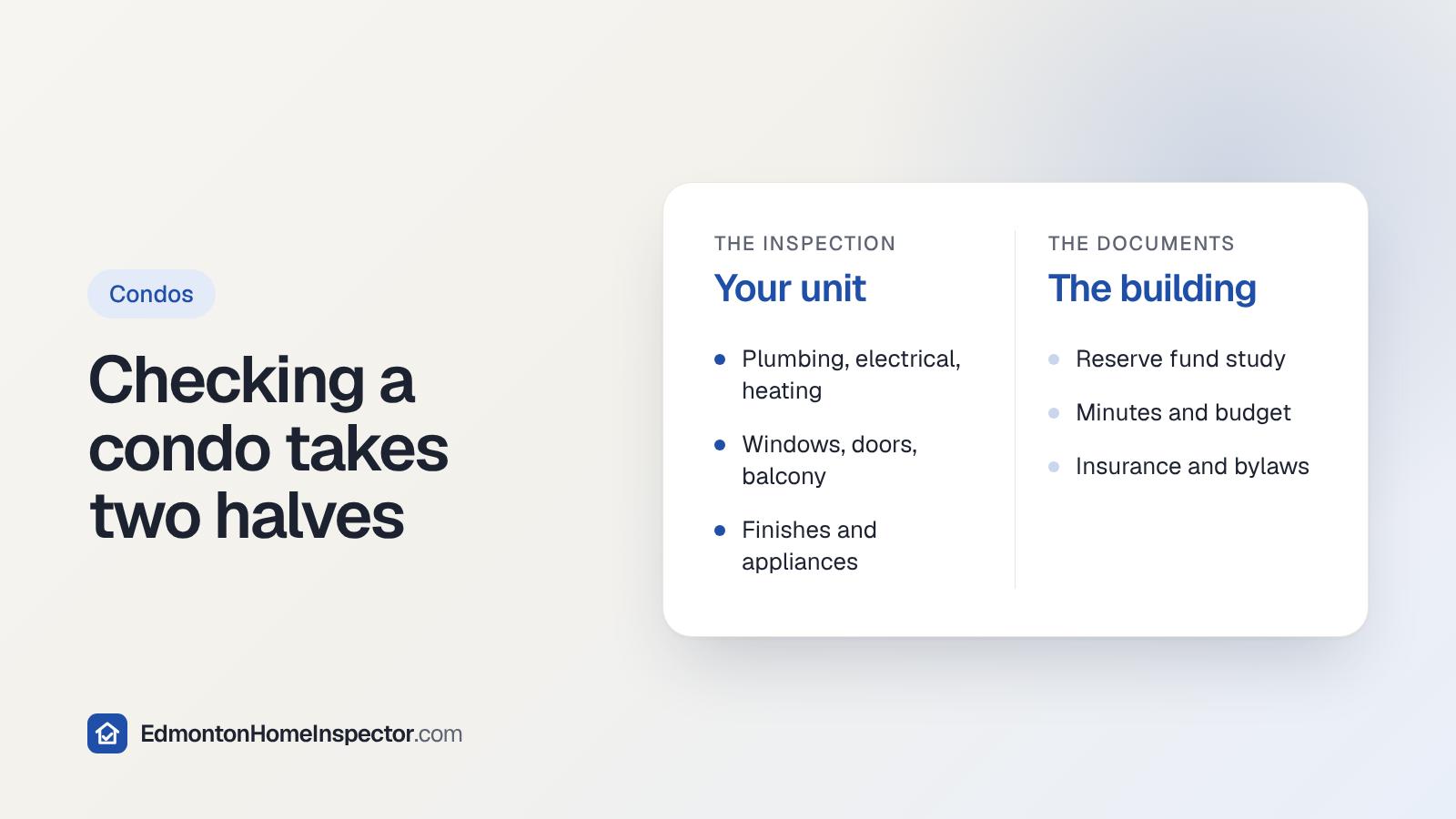
So there are two halves to checking a condo: the inspection tells you about your unit, and the condo documents tell you about the building and the corporation’s finances. This post explains what each one covers and what to ask for.
What is inspected inside a condo unit?
Inside the unit, a condo inspection follows the same visual approach as a house inspection, scaled to what you will own and maintain. A typical list:
- Plumbing: visible supply and drain lines, fixtures, shut-off valves, the water heater if the unit has its own, and signs of past or active leaks under sinks and around tubs and toilets.
- Electrical: the unit’s panel, a sample of outlets and switches, and safety devices such as GFCI outlets near water.
- Heating and cooling: whatever serves the unit, whether that is a furnace, a fan coil, baseboard heaters or in-floor heat, run with normal controls.
- Ventilation: bathroom and kitchen exhaust fans, dryer venting and signs of condensation on windows.
- Windows, doors and balcony: operation, seals, signs of water getting in, and the visible condition of a balcony or patio.
- Interior finishes and appliances: floors, walls and ceilings for stains or movement, and built-in appliances run through a basic cycle.
The condo inspection page lists what is and is not included.
What about common property like the roof and parkade?
Common property is usually outside the inspection’s scope, though the inspector will note what can be seen from shared hallways, stairwells, the parkade and the exterior. The Centre for Public Legal Education Alberta describes common property as the parts of the complex outside the boundaries of the individual units.
Alberta’s home inspection rules reflect this split. The Government of Alberta’s home inspection business licence page lists inspections of common areas of condominiums among the things that do not need a home inspection business licence. In practice, the roof, foundation, exterior walls, elevators, boilers and parkade are usually looked after by the corporation, and their condition shows up in the corporation’s reports and plans.
A simple way to think about it:
- Your unit: inspected in detail on the day. You see the condition yourself, with photos in the report.
- Common property: looked at where visible and accessible. Its real condition, and who pays to fix it, is in the condo documents.
Exactly where the unit ends and common property begins depends on the condominium plan and bylaws, so check them rather than assuming. Townhouses and bare land condos can draw the line very differently from an apartment building.
Which condo documents should I ask for in Alberta?
Ask for the documents the corporation must provide to a buyer under Alberta’s Condominium Property Act and its regulation. The Alberta Real Estate Association notes that the Act requires the corporation to provide the documents to a purchaser within 10 days of a written request.
The CPLEA resale document checklist lists what a buyer can request, including:
- An information statement covering lawsuits, judgments, the reserve fund balance, contributions and known structural deficiencies.
- The budget and annual financial statements.
- The bylaws and a consolidation of the rules.
- Approved general meeting minutes and board minutes.
- Professional reports, such as engineering reports.
- The insurance certificate, the policy and the standard insurable unit description.
- Reserve fund plans, reserve fund reports and annual reports.
- Leases or exclusive use agreements, such as for parking or storage.
CPLEA also notes that corporations may charge for copies, and more for rush requests. In a resale purchase, the standard Alberta condo contract includes a condominium documents condition, and the AREA article explains that it sets a document delivery date for the seller and a condition date for you. It also notes that a professional document review can take 10 to 14 days, which is worth knowing when you set your dates.
What is a reserve fund study and why does it matter?
A reserve fund study is the corporation’s long-range look at what its shared parts will cost to repair or replace. According to the Government of Alberta, a study must be completed at least every 5 years and should consider a 30-year timeframe. The board then approves a reserve fund plan based on the study, and owners receive a copy.
For a buyer, the study and plan answer practical questions:
- Which big items, such as the roof, windows, boiler or parkade membrane, are due in the next few years?
- Is there enough money set aside to pay for them?
- Are contributions expected to rise to keep up?
If the fund looks thin compared with upcoming work, owners may be asked to pay a special levy. CPLEA defines a special levy as a contribution owners can be charged on top of their regular condo fees.
How do the inspection and the document review fit together?
They answer different questions, so you want both. The inspection tells you whether the unit has issues you would pay for yourself, such as a worn water heater, a slow drain or a leaking window seal. The documents tell you whether the building has issues all the owners will pay for together.
The two also inform each other. If the report notes staining on a ceiling below a balcony, the minutes may show whether the board already knows about balcony leaks. If an engineering report mentions window replacement, the inspection can tell you how the windows in your unit look today. A lawyer or a condo document reviewer is the right person to read the financial and legal side in depth.
What should I ask the seller or condo manager?
A few questions help you read the documents with context:
- Who is responsible for the windows, balcony, water heater and in-suite heating equipment: the owner or the corporation?
- Are any special levies approved or being discussed?
- Has the building had water leaks, and were they in or near this unit?
- Is any major project planned, such as roof or envelope work?
- What does the corporation’s insurance cover, and what should your own condo policy cover?
Write the answers down and compare them with the minutes and reports. If something does not line up, raise it with your REALTOR® and lawyer before your condition date.
Book early so both halves fit in your condition period
Because a condo purchase often has an inspection condition and a document condition running at the same time, it helps to book the inspection as soon as your offer is accepted. See how it works for what to expect on the day, or book an inspection for a condo in Edmonton, St. Albert or nearby.
Sources
- Reserve funds, Government of Alberta
- Condominium Property Act, Alberta King’s Printer
- Home inspection business licence, Government of Alberta
- Buying a Resale Condo: Document Checklist, Centre for Public Legal Education Alberta
- A Guide to Commonly Used Condo Terms, Centre for Public Legal Education Alberta
- What should I know about the condominium documents condition?, Alberta Real Estate Association
Founder
Banish is the founder of EdmontonHomeInspector.com, a home inspection business starting up in the Edmonton area. These guides explain Alberta's rules and common house issues in plain language, and every fact links to its official source at the end of the post. Licence numbers will be listed here once issued.
Last reviewed