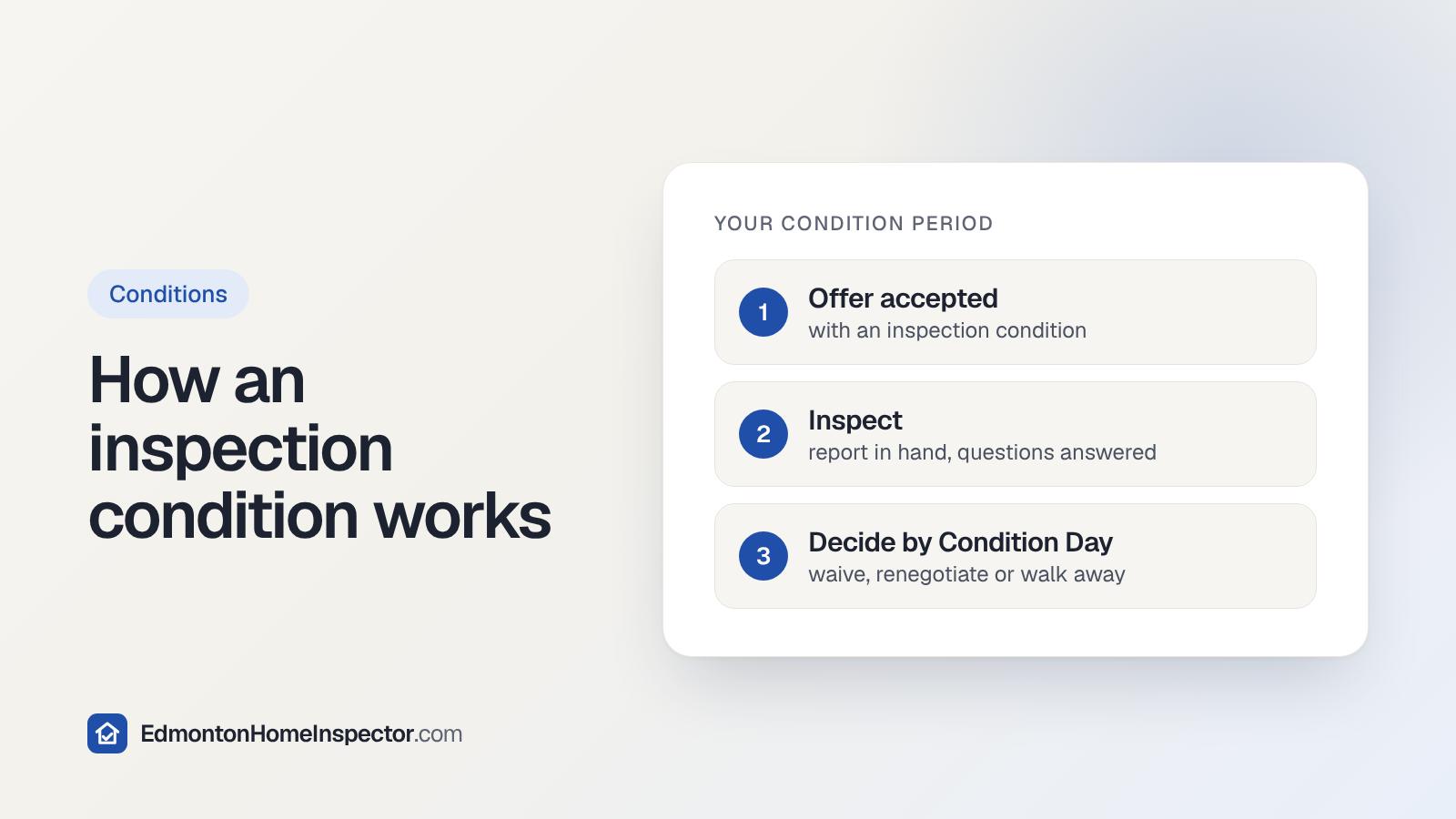
Is a home inspection a condition of sale in Alberta?
A home inspection is optional in Alberta. It becomes part of the deal only if you write it into your offer. Here is how inspection conditions work and what happens if issues come up.
· 4 min read
Inspections are opening soon. Send your details and we'll reach out to confirm availability for your date.
Service area
Century-old houses in Highlands, 1970s Mill Woods, central condos and brand-new suburbs.
Edmonton has more than a century of houses. The City calls its oldest areas mature neighbourhoods, and they were essentially built out before 1970. Highlands started in 1910 as an upscale district, and Strathcona, Garneau and Ritchie sit in what was once the separate City of Strathcona. A house there may still have original wiring, plumbing or foundation walls next to rooms renovated last year. A pre-purchase inspection helps sort out which parts are old and which are new.
From the early 1970s the city planned large suburbs. Mill Woods was approved in 1971 and tested small-lot and zero lot-line housing. Homes from the late 1970s to the late 1990s fall in the years Poly-B supply pipe was in wide use, so the utility room and any exposed piping get a careful look.
Near downtown, Oliver is mostly apartment-style buildings, many from the 1960s and 1970s. Buying a unit there means the building matters as much as the suite, so a condo inspection pairs well with a close read of the condo documents.
On the city edges, neighbourhoods such as Windermere were still in early development in the mid-2000s and keep adding homes. New houses here bring different questions: settled backfill, grading that slopes the wrong way, and finishing details missed in a rush to possession. A new construction inspection is built for that stage.
EPCOR notes that high-clay soil is common in Edmonton, drains slowly and can swell when wet. An inspection looks at grading, downspout extensions and visible foundation cracks or staining.
EPCOR says homes built before 1960 may have a lead service line. An inspection notes the visible pipe at the meter, but only a water test confirms lead, and EPCOR offers testing.
Knob-and-tube was standard before 1950, and some insurers treat it as high risk. Where wiring is visible, an inspection flags it so a licensed electrician can assess it.
Grey Poly-B pipe is likely in homes built roughly 1980 to 1998, and some insurers charge more for it. An inspection notes it wherever piping is visible.
EPCOR says homes built before 1989 likely have weeping tile only, while most later homes also have a sump pump. An inspection notes what drainage equipment is visible in the basement.
Not for certain. An inspection notes the visible pipe where water enters the home, and EPCOR says homes built before 1960 may have a lead service line. Only a water test confirms it, and EPCOR offers free testing for customers with lead lines.
Yes. A condo inspection covers the unit and its systems plus any shared areas we can access. The rest of the building is covered by the condo documents, such as the financial statements, reserve fund details and board minutes.
Yes. Most of an inspection is unaffected by winter. Snow can limit what is visible on the roof and around the grading, and the report says exactly what could not be seen.
A home inspection is optional in Alberta. It becomes part of the deal only if you write it into your offer. Here is how inspection conditions work and what happens if issues come up.
· 4 min read
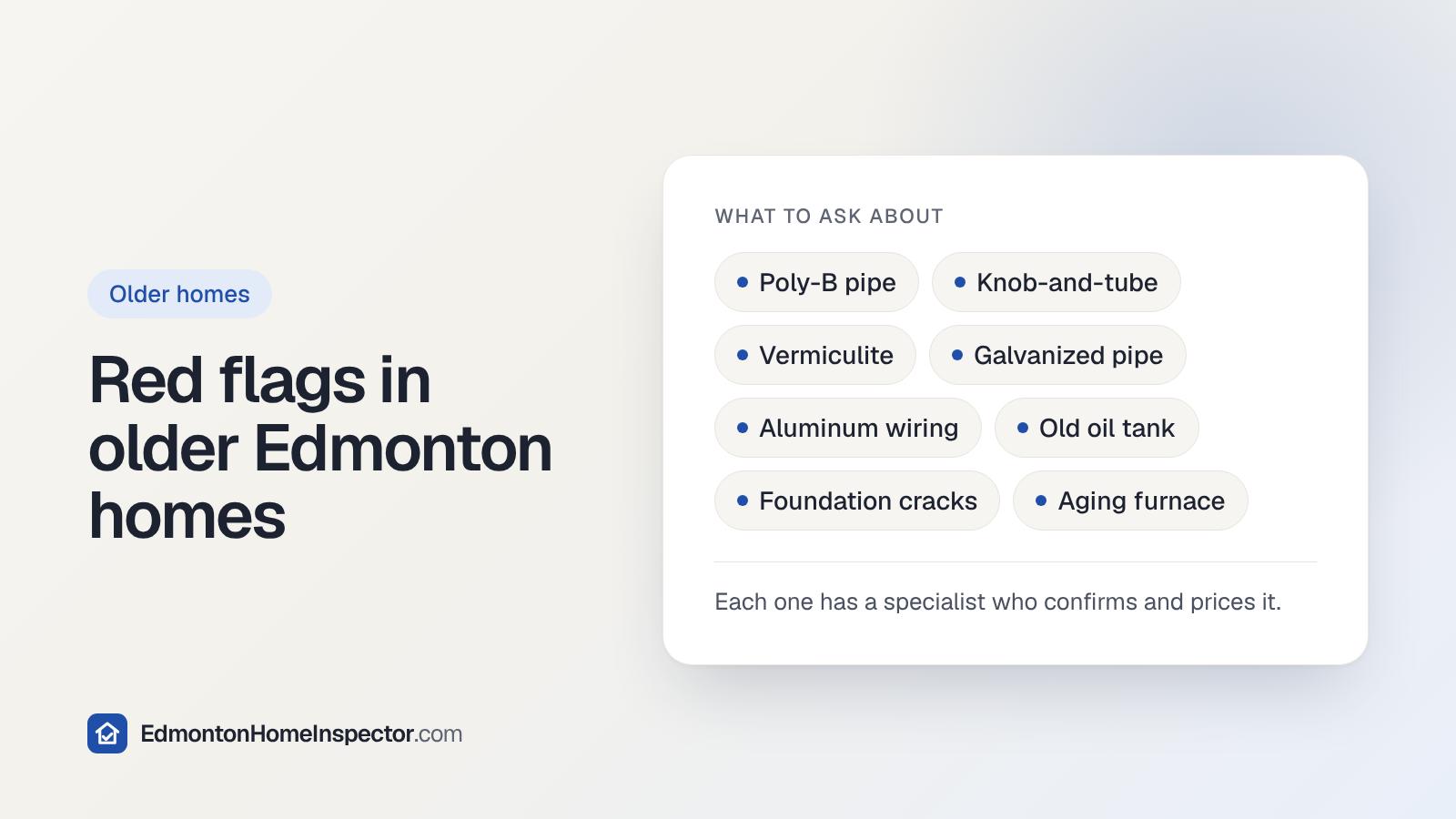
Poly-B, knob-and-tube, vermiculite, galvanized pipes and more: what each looks like, why insurers ask about it, and which specialist to call next.
· 5 min read
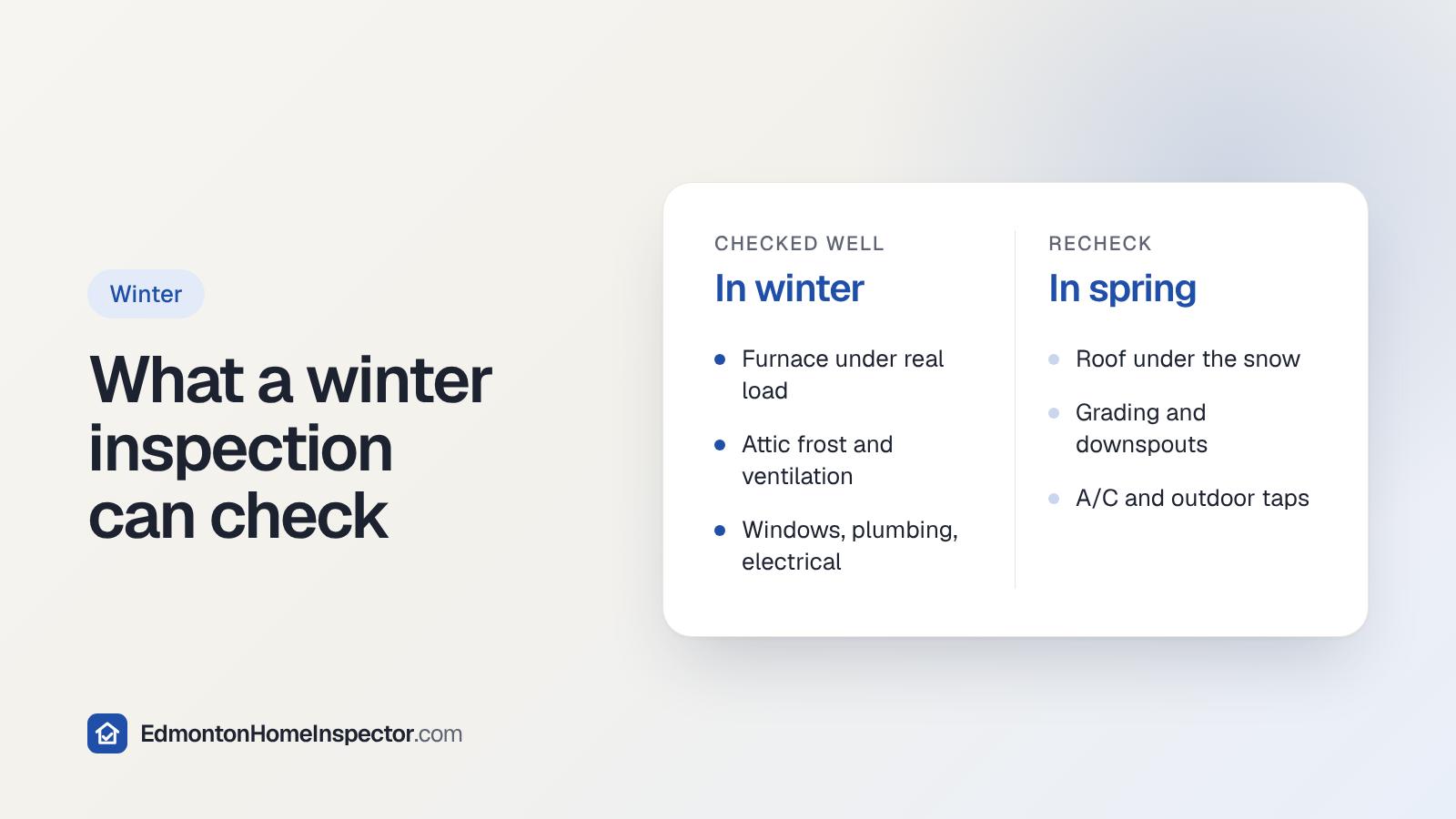
Snow and cold limit a few parts of an inspection, but the heating system, attic and interior can be checked well. Here is what a winter report covers and what to look at again in spring.
· 5 min read
Get on the priority list and we'll contact you to confirm availability and a quote.