What does a home inspection include in Alberta?
A home inspection is a look at the parts of a house you cannot easily judge on a showing: the roof, the structure, and the systems that keep the home warm, dry and safe. In Alberta, the province sets out what the contract and the report have to cover, so you know what you are getting before anyone arrives.
You leave with a written report that explains the condition of each part of the home, flags what needs attention and recommends a next step for each finding.
What is a home inspection in Alberta, exactly?
It is an opinion on the condition of a home based mainly on what the inspector can see and reach. Alberta's Home Inspection Business Regulation describes it as an examination based primarily on a non-invasive look at the readily accessible features and components of the dwelling.
In practice, that means the inspector looks, operates normal controls and uses ordinary tools. They do not cut into drywall, lift flooring or take things apart. If something is hidden behind a finished wall, the report can only describe the signs around it.
Which parts of the house does an inspector look at?
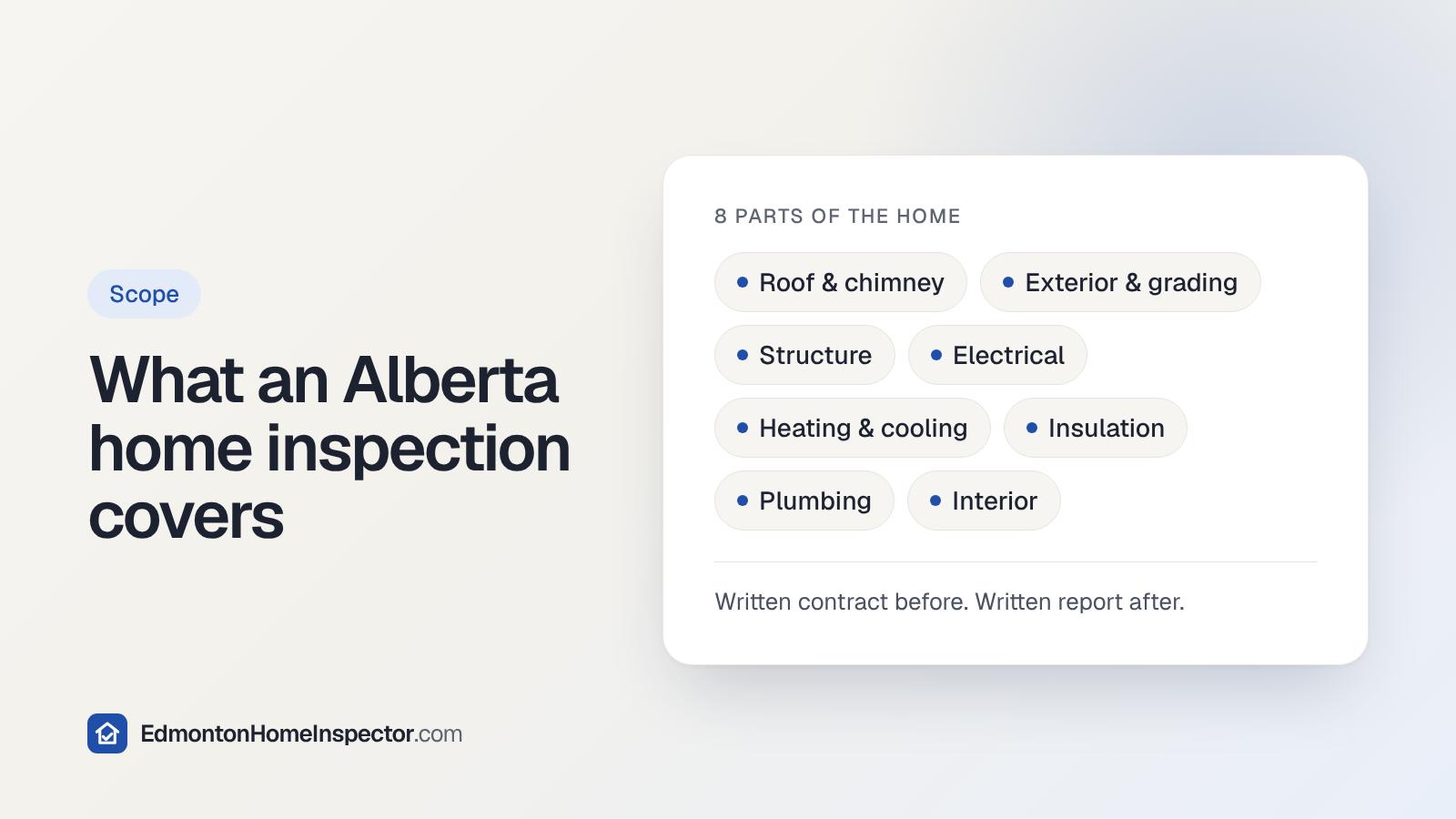
The regulation lists the parts of the home a contract must cover unless you initial an exclusion. Here is what each one means in practice.
- Roofing, flashings and chimney. The roof covering, the metal and sealant details where the roof meets walls and vents, the chimney, and the gutters and downspouts that carry water away.
- Exterior. Siding, trim, windows and doors from outside, plus lot grading, walkways, driveways, retaining walls, patios and decks. Grading matters because it decides whether water runs toward or away from the foundation.
- Structure. The visible foundation walls and framing, and signs of movement, settling or moisture.
- Electrical. The service panel, visible wiring, outlets and switches, and safety devices such as GFCI and AFCI protection.
- Heating, heat pumps and cooling. The furnace or boiler, its venting, and air conditioning or a heat pump when the weather allows it to be run.
- Insulation. What can be seen in the attic and other accessible spaces, along with ventilation.
- Plumbing. Supply and drain lines, fixtures, the water heater and visible leaks.
- Interior. Walls, ceilings, floors, stairs, railings and built-in appliances.
Under the same regulation, a garage or carport is part of the inspection. Other outbuildings and detached structures are only included if the contract says so.
What has to be in the home inspection contract?
The contract is where you confirm the scope. Alberta requires it to be in writing, legible and signed by you and the business before the inspection, and you get a copy when it is signed.
The regulation requires the contract to include:
- Your name and address
- The business's name, licence number, address and contact details
- The inspector's name and licence number
- The address of the home
- The date of the contract, the date of the inspection and the date you will get the report
- Any component that will not be inspected, with your initials beside it
- A statement, initialled by you, if mould or asbestos will not be inspected
- A statement that the inspection is non-invasive unless you agree to specific invasive procedures
The contract and the report must not include wording that limits the inspector's or business's liability, or limits the time you have to make a claim. The Government of Alberta's guide to hiring a home inspector adds one practical tip: make sure everything you want inspected is listed in the contract.
What will the home inspection report tell me?
The report describes the condition of each part of the home the contract covers and makes a recommendation on each problem found.
The regulation sets a few rules for the report:
- It must be in writing and legible.
- It must address every component included in the contract.
- It must make recommendations on any deficiencies. A recommendation to get an expert opinion counts.
- It must reach you on or before the date in the contract.
- Its contents cannot be shared without your written permission, except where the law requires it or there is a serious health or safety risk.
A good report is easy to read on a phone at 10 pm with a condition deadline coming. Each finding should say what it is, why it matters and what to do next. You can see the layout on our sample report page.
What does a home inspection not include?
Anything that needs testing, opening up or a specialist. These are the common ones:
- Repair cost estimates. Alberta does not allow inspectors or inspection businesses to estimate the cost of a repair or improvement.
- Mould and asbestos testing. If they are excluded, the contract has to say so.
- Radon. Health Canada recommends a long-term test of at least 91 days, with most of it during the heating season, and suggests every home be tested.
- Sewer line camera scopes. A plumbing specialist does this.
- Building code compliance. In Edmonton, the City's safety codes inspections are a separate process: a point-in-time audit of permitted work against minimum safety standards.
- Cosmetic items. Paint colours and finishes are a matter of taste.
When the inspector sees a sign that one of these is worth doing, the report should say so.
Is a condo inspection different?
Yes, in scope. A condo inspection covers your unit and its systems, plus the shared areas the inspector is given access to. The roof, structure and common systems belong to the condominium corporation, so the condo documents fill in the rest. The Real Estate Council of Alberta notes that making an offer without reviewing condominium documents raises the chance of a deal running into trouble.
How can I get the most out of the inspection?
- Read the contract before you sign and check that nothing you care about is excluded.
- Plan to attend. Alberta's hiring guide says the inspector should walk through the home with you and point out problems.
- Bring the questions you noted at the showing.
- Use our home inspection checklist to prepare.
- Read the full report, not only the summary, before your condition deadline.
Before you book anyone, check that the inspector and the business are licensed in Alberta. This applies whether you are buying in Edmonton, St. Albert or Fort Saskatchewan. For buyers, the pre-purchase home inspection page explains the service, and how it works shows the steps.
Sources
- Home Inspection Business Regulation (Alta Reg 75/2011), Alberta King's Printer
- Hiring a home inspector, Government of Alberta
- Home inspector licence, Government of Alberta
- Guide for radon measurements in residential dwellings (homes), Health Canada
- Residential inspections, City of Edmonton
- Should you make a condition-free offer? The risks you need to know before you bid, Real Estate Council of Alberta
Founder
Banish is the founder of EdmontonHomeInspector.com, a home inspection business starting up in the Edmonton area. These guides explain Alberta's rules and common house issues in plain language, and every fact links to its official source at the end of the post. Licence numbers will be listed here once issued.
Last reviewed