What can a winter home inspection check in Edmonton?
Yes, you can get a useful home inspection in an Edmonton winter. Most of an inspection happens inside, and cold weather is a good time to see how the heating system and the building envelope are working.
What changes is the outside. Snow, ice and frozen ground hide some things, and some equipment should not be run in the cold. A good winter report tells you plainly what could not be seen and what to look at once the snow melts.
What can a winter inspection check well?
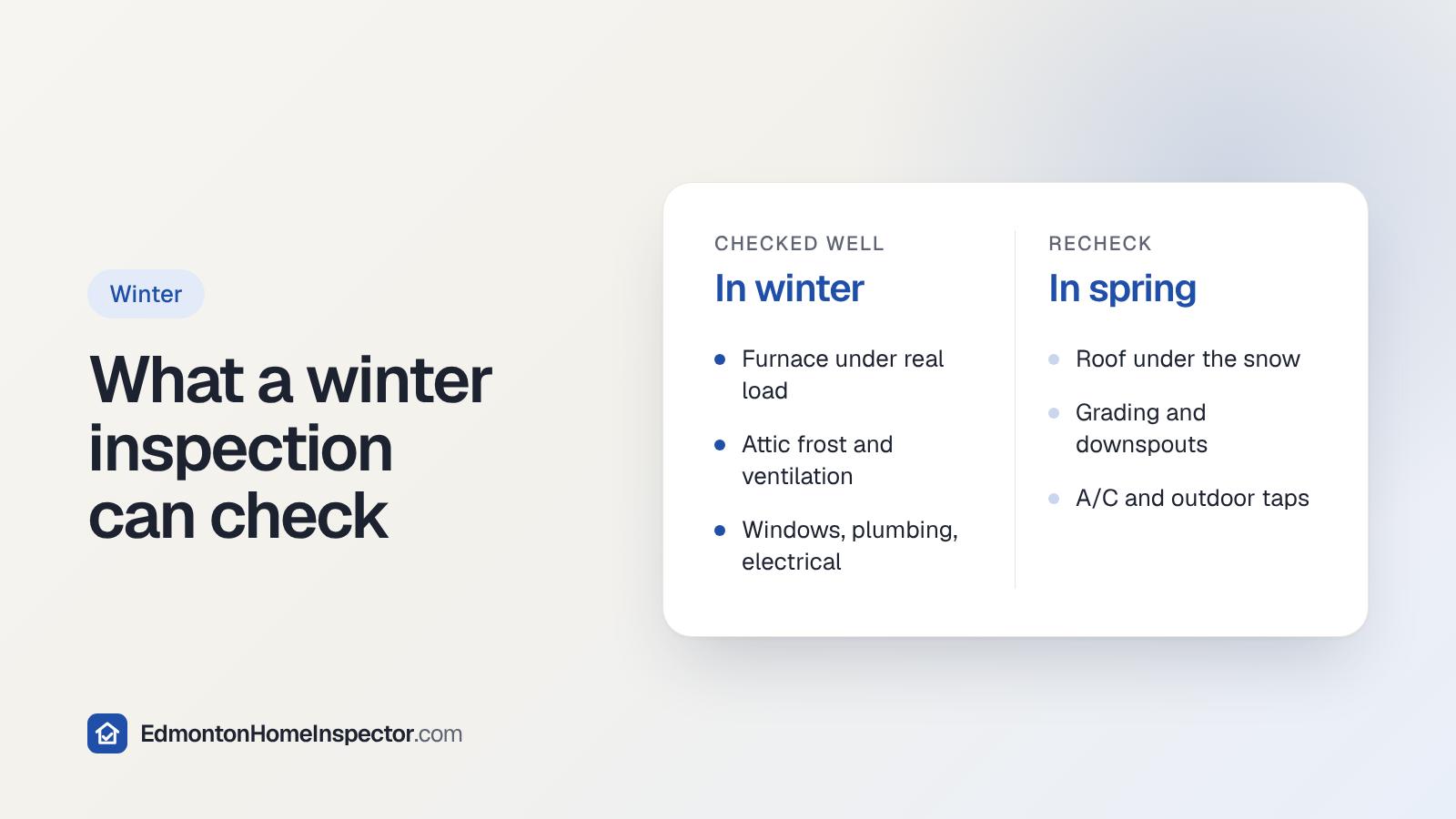
Most of the house is inspected the same way in January as in July. Some things are easier to judge in winter:
- Heating: the furnace or boiler is already running, so you can see how it operates under real load, along with its venting and controls.
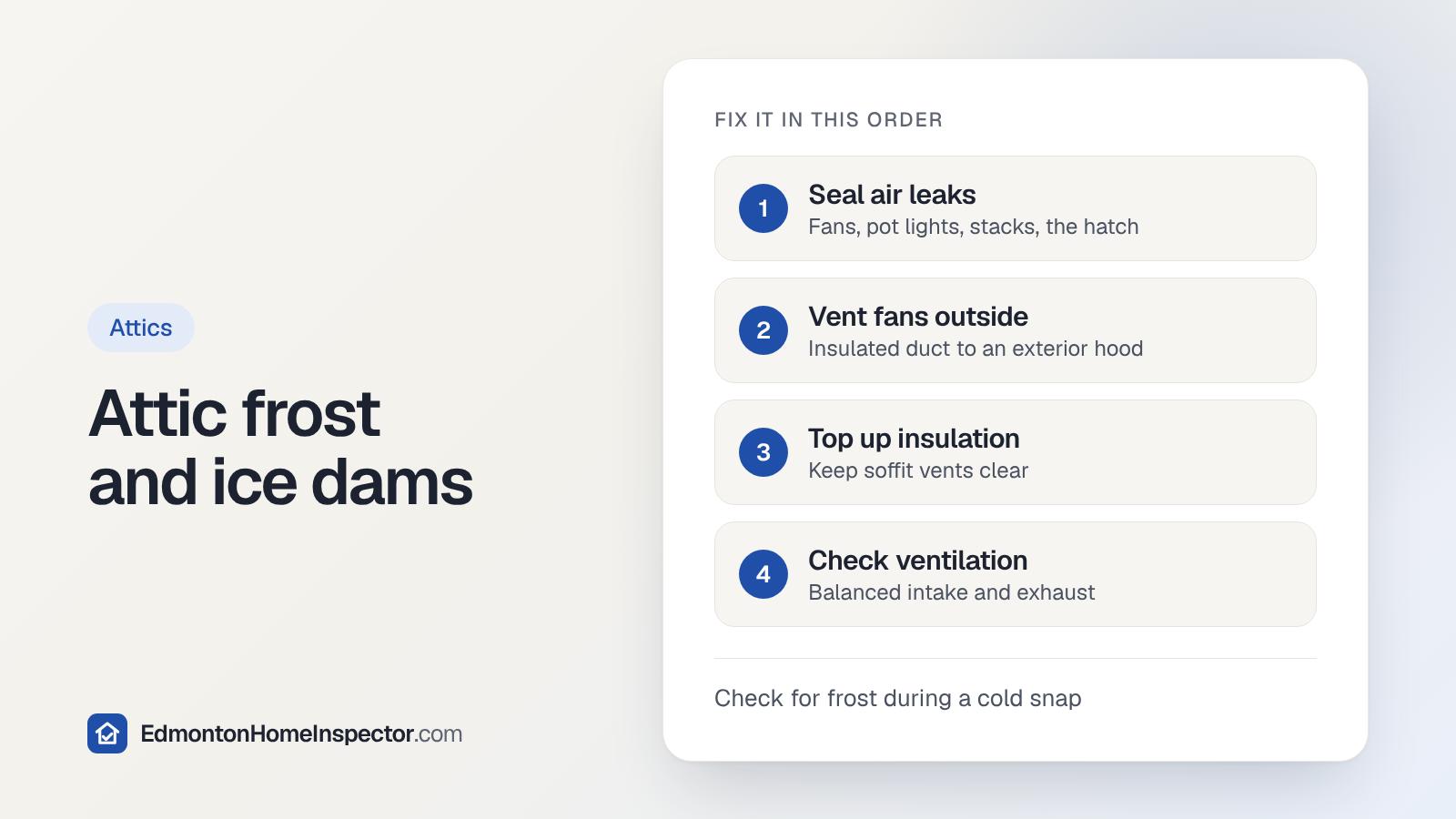
- Attic: frost on the underside of the roof sheathing or on nails can point to warm, moist air leaking into the attic. Travelers Canada explains that this frost can melt quickly and drip, which is often called attic rain.
- Windows and doors: heavy condensation or frost on the inside can suggest high indoor humidity or worn seals.
- Interior, plumbing and electrical: walls, ceilings, floors, fixtures, drains, the water heater and the electrical panel are inspected as usual.
- Exhaust vents: Health Canada advises checking exhaust vents after snowstorms so that ice, snow or debris is not blocking them. An inspection notes vents that are blocked or poorly placed.
What can’t be checked when there is snow on the ground?
Snow and ice hide surfaces, and inspection standards do not require the inspector to move them. The InterNACHI Standards of Practice, one widely used standard, say an inspector is not required to remove snow, ice or debris that prevents observation of the roof, or to walk on a roof that appears unsafe or could be damaged.
In winter, that usually affects:
- Roof covering: shingles under snow cannot be assessed. The inspector looks at what is visible, at the attic from inside, and at signs such as ice buildup at the eaves.
- Grading: the slope of the ground around the foundation is hidden. The City of Edmonton notes that settlement near foundation walls often becomes noticeable after rainstorms or during snow melt.
- Decks, walkways and patios: surfaces and some framing may be covered.
- Window wells and the foundation exterior: the lower parts are often buried.
Why isn’t the air conditioner tested in winter?
Running a central air conditioner in cold weather can damage it, so inspection standards let inspectors skip it. The InterNACHI Standards of Practice say an inspector is not required to operate cooling equipment when the outdoor temperature is below 65°F (about 18°C), or when conditions could damage the equipment. Other standards and manufacturers set their own limits, so the unit’s installation manual is the final word.
In a winter report, the A/C is described by type and visible condition. The outdoor unit can be looked at for damage, and the age may be readable from its label. Whether it actually cools is left for spring or for an HVAC technician.
What about outdoor taps and irrigation?
Outdoor taps are usually shut off for winter and should stay that way. EPCOR advises Edmonton homeowners to disconnect hoses and turn off outdoor faucets, because a frozen tap can burst and cause water damage in the home. EPCOR also suggests insulating irrigation equipment and shutting off its main valve.
An inspector will not turn the water back on to an outdoor tap in freezing weather. The report notes the tap was not tested and where it is, and you can test it once the risk of frost has passed.
Cold weather also shows where pipes are at risk inside. EPCOR points to water lines near outer walls and doors, exposed pipes in unfinished basements, and crawl spaces or the spot where the water line enters the home. An inspector notes supply lines in these cold spots that look uninsulated, and any frost or staining around them.
If the home is vacant, ask your REALTOR® whether the heat has been left on and the water shut off. A vacant home that has been cold for a while can have plumbing problems that only show once the water runs again, so the report will say if the water was off on the day.
What does a winter report note?
A winter report should be clear about limits, not vague. Expect it to note:
- The weather on the day, including temperature and snow cover.
- Each area that was covered or not accessible, such as the roof, grading or deck.
- Equipment that was not operated, such as the air conditioner or outdoor taps, and why.
- Things seen indirectly, such as attic frost, ice at the eaves, or staining inside that could relate to the roof.
- A short list of items to recheck in spring.
The Government of Alberta’s consumer tips point out that an inspector is responsible only for what is listed in the inspection contract, so read the contract and the limitations section together.
What should I follow up on in spring?
Use the report’s limitations as your spring checklist. A practical order:
- Walk the grading once the snow is gone. The City of Edmonton says grading should direct water away from the house, and suggests extending downspouts past the foundation wall.
- Look at the roof from the ground or with binoculars, or have a roofer look if the report flagged ice buildup or attic frost.
- Test outdoor taps after the frost risk has passed and watch inside for leaks.
- Run the air conditioner on a warm day, or have an HVAC technician service it.
- Check decks and window wells for rot, loose boards and drainage.
If you are working to a tight condition date, you can also talk to your REALTOR® about whether a later look at specific items makes sense. The home inspection checklist is a handy list to work from.
Is winter a bad time to buy?
Not because of the inspection. A winter report covers most of the house, and it can show how the home handles the cold. The trade-off is a few items you will check yourself in spring. To book a pre-purchase inspection in Edmonton, Spruce Grove or Leduc, see how it works or book online.
Sources
- InterNACHI Home Inspection Standards of Practice, International Association of Certified Home Inspectors
- Frozen pipes, EPCOR
- Lot grading problems, City of Edmonton
- Carbon monoxide: Preventing exposure, Health Canada
- Managing attic rain, Travelers Canada
- Hiring a Home Inspector (Consumer Tips), Service Alberta
Founder
Banish is the founder of EdmontonHomeInspector.com, a home inspection business starting up in the Edmonton area. These guides explain Alberta's rules and common house issues in plain language, and every fact links to its official source at the end of the post. Licence numbers will be listed here once issued.
Last reviewed