How old is too old? Typical lifespans of a furnace, water heater, roof and more
Every major part of a house has a typical service life. Knowing roughly where each one sits helps you read an inspection report calmly and plan what to save for in your first few years.
The ranges below come from published industry studies and federal guidance. They are averages, not expiry dates. A well-kept 20-year-old furnace can outlast a neglected 10-year-old one.
How long do furnaces, water heaters and roofs usually last?
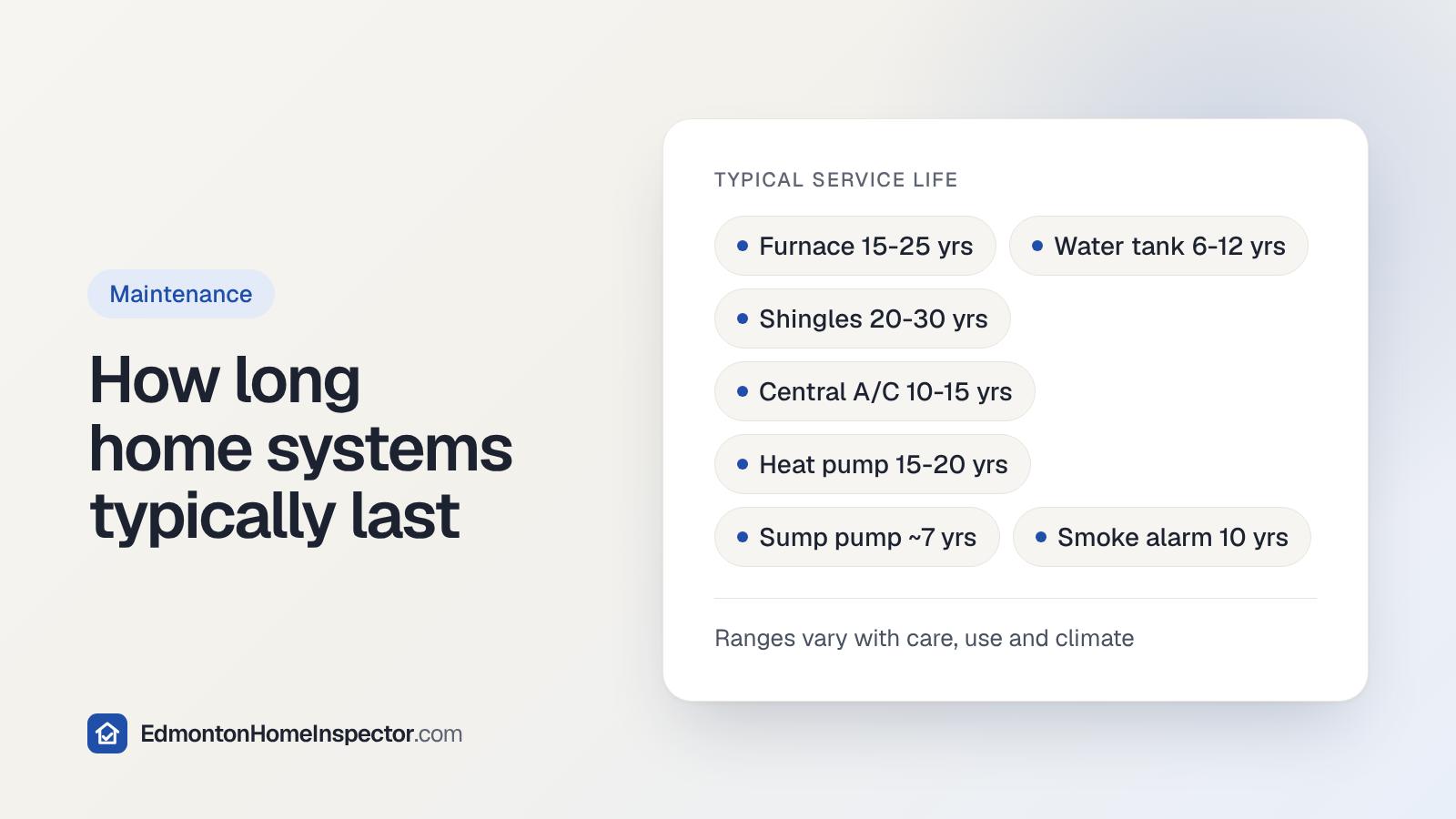
Most sources put gas furnaces at 15 to 25 years, tank water heaters at about 6 to 12 years, and asphalt shingle roofs at about 20 to 30 years. Here are the common ranges, with where each figure comes from:
- Gas furnace: 15 to 25 years. InterNACHI's life expectancy chart gives 15 to 25 years. The NAHB study of home components gives 15 to 20.
- Tank water heater: about 6 to 12 years. InterNACHI lists 6 to 12 years for a conventional tank, and the NAHB study puts gas and electric tanks at about 10.
- Tankless water heater: 20 years or more, according to the NAHB study.
- Asphalt shingle roof: about 20 to 30 years. InterNACHI lists about 20 years for three-tab shingles and about 30 for heavier architectural shingles.
- Central air conditioner: 10 to 15 years, according to the NAHB study.
- Air-source heat pump: 15 to 20 years. Natural Resources Canada gives this range, and 20 to 25 years for ground-source systems.
- Windows: about 15 to 20 years for aluminum, and 30 or more for wood, according to the NAHB study. Sealed glass units can fail earlier than the frames around them.
- Sump pump: around 7 years, according to InterNACHI.
- Smoke alarms: replace every 10 years. Edmonton Fire Rescue Services advises replacing both hard-wired and battery alarms on a 10-year cycle.
- Carbon monoxide alarms: follow the replace-by date. Lifespans vary by model, and alarms from makers such as Kidde give an end-of-life warning chirp that a new battery will not stop.
Why do the lifespan numbers vary so much?
Because installation, maintenance, use and weather all change how fast things wear out. The published ranges are averages across many homes and climates.
- Installation. A furnace sized and vented correctly, or a roof with good attic ventilation, has an easier life.
- Maintenance. Natural Resources Canada recommends having natural gas furnaces and boilers serviced at least every two years, and oil-fired equipment cleaned and tuned every year.
- Use. A water heater in a busy family home cycles far more than one in a single-person condo.
- Real-world ageing. Labels and warranties are not the same as measured service life. A University of Ottawa study of field-aged asphalt shingles found that shingles in service for at least 13 years had lost much of their resistance, and most no longer met the standards referenced in the National Building Code.
This is why the NAHB authors and InterNACHI both present their figures as general guides, not guarantees.
How does Edmonton's climate affect these systems?
A long, cold heating season puts real hours on a furnace, and spring melt and summer storms test roofs and sump pumps. A few local factors are worth knowing:
- Furnaces run hard. In a place where the heat is on for much of the year, regular servicing matters more than it would in a mild climate.
- Hail is a roof risk across Alberta. The Insurance Bureau of Canada reports that Alberta has had at least one major hailstorm every year for years running. Much of that damage has been in Calgary and the south, but a single storm can shorten any roof's life.
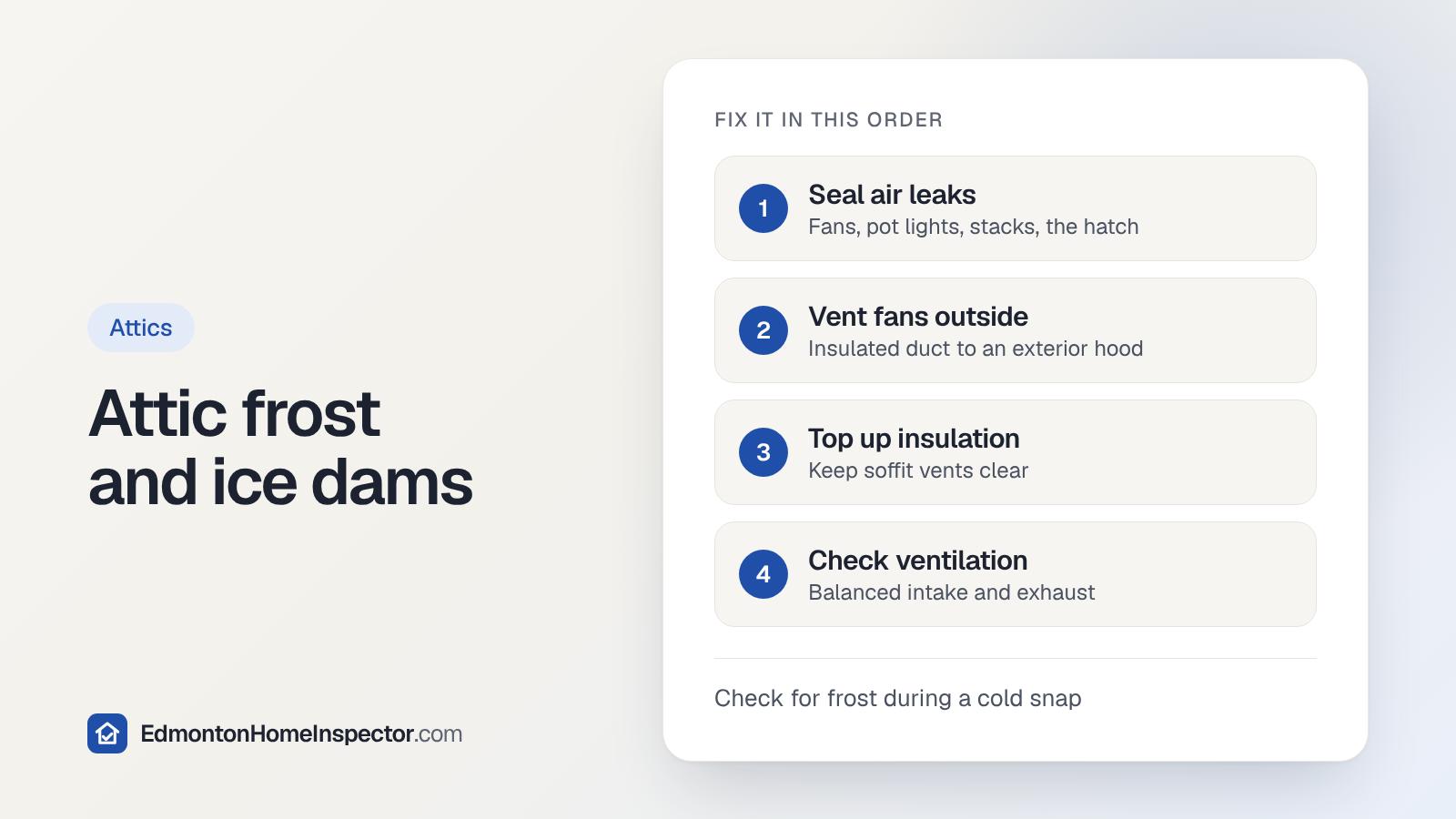
- Ice dams and attic frost. Heat leaking into a cold attic can lead to frost and meltwater, which is hard on roof sheathing. Read attic frost and ice dams in Edmonton for the signs.
- Sump pumps work in spring and summer. EPCOR recommends testing your pump on the manufacturer's schedule, and suggests an alarm and a backup power system in case it fails. In winter, it advises disconnecting the outdoor discharge hose so it does not freeze.
- Water minerals. Edmonton's tap water contains dissolved minerals. EPCOR's December 2023 water quality summary shows total hardness averaging about 174 mg/L as calcium carbonate. Minerals can settle in a tank over time, so follow the draining or flushing steps in your water heater's manual.
For more on how cold weather affects what an inspector can test, see winter home inspections in Edmonton.
How can I find out how old my furnace or water heater is?
Look for the data plate, the label with the model and serial number. On a furnace it is usually inside the front panel. On a water heater it is on the side of the tank.
- Read the date. Some labels print a manufacture date. Others encode it in the serial number, and the manufacturer can usually decode it if you call with the model and serial.
- Use the furnace type as a clue. Federal energy efficiency rules have required most new residential gas furnaces to reach at least 90% efficiency since the end of 2009, and Natural Resources Canada now lists a 95% minimum. High-efficiency furnaces usually vent through white plastic pipe. A gas furnace venting into a metal chimney liner is likely an older, lower-efficiency unit.
- Ask for paperwork. Receipts, warranty registrations and permit records from the seller can date a roof, furnace or water heater more reliably than a guess.
- Check alarms. Smoke and carbon monoxide alarms have a date on the back or side.
An inspector will note ages where they can be read, and describe the visible condition either way. Age and condition are different things, and the report should tell you both.
Is an old furnace or roof a reason not to buy?
Usually not on its own. A system near the end of its typical range is something to plan for, not a defect in itself.
What matters is condition, safety and timing. A report might say a furnace is older but operating, with a recommendation to have a gas fitter service it. That is very different from a cracked heat exchanger or a roof with active leaks. Our post on red flags in older Edmonton homes covers the issues that tend to matter more.
Alberta's Home Inspection Business Regulation does not allow home inspectors to estimate repair or replacement costs. If an ageing system matters to your decision, ask a qualified trade for a quote during your condition period. How to negotiate repairs after a home inspection explains what to do with those quotes.
How should I budget for replacements after I move in?
Make a simple list, put rough timelines beside each item, and start setting money aside monthly. A few steps:
- Write down each major system, its age if known, and its typical range from the list above.
- Mark anything already past or near the end of its range.
- Get quotes from trades for the items most likely to need replacing in the next five years.
- Divide those amounts by the months you expect to have, and save toward them.
- Book regular servicing so the systems you have last as long as they reasonably can.
The Financial Consumer Agency of Canada has a home budget worksheet that includes a line for occasional ownership costs, divided by 12 for a monthly figure. Replacement savings fit neatly there.
A pre-purchase inspection is a good time to start that list. If you are buying soon, see the pre-purchase home inspection page.
Sources
- InterNACHI's Standard Estimated Life Expectancy Chart for Homes, International Association of Certified Home Inspectors
- Study of Life Expectancy of Home Components (2007), National Association of Home Builders and Bank of America Home Equity
- Heating and cooling with a heat pump, Natural Resources Canada
- ENERGY STAR new homes: maintenance, Natural Resources Canada
- Gas furnaces (Energy Efficiency Regulations), Natural Resources Canada
- Energy Efficiency Regulations, 2016 (SOR/2016-311), Justice Laws Website, Government of Canada
- Smoke alarm safety sheet, City of Edmonton Fire Rescue Services
- Carbon monoxide alarm chirping? Is your alarm trying to tell you something?, Kidde Canada
- Performance requirements for climate resilience of residential roofs, University of Ottawa
- Alberta continues to see large-scale impacts from hailstorms, Insurance Bureau of Canada
- Weeping tile and sump pumps, EPCOR
- Edmonton water quality monthly summary, December 2023, EPCOR
- Home Inspection Business Regulation (Alta Reg 75/2011), Alberta King's Printer
- Planning your household budget, Financial Consumer Agency of Canada
Founder
Banish is the founder of EdmontonHomeInspector.com, a home inspection business starting up in the Edmonton area. These guides explain Alberta's rules and common house issues in plain language, and every fact links to its official source at the end of the post. Licence numbers will be listed here once issued.
Last reviewed