Is a sewer scope inspection worth it in Edmonton?
The pipe that carries everything from your toilets, sinks and floor drains out to the street is buried under the yard, out of sight. Most buyers never think about it until it backs up. A sewer scope is a way to look inside it before you own it.
It is a separate service from a standard home inspection, and it is not needed for every house. But for some Edmonton homes, especially older ones on treed lots, it can be one of the most useful extra checks you can make.
What is a sewer scope inspection?
It is a video inspection of the main sewer line. A technician feeds a waterproof camera on a flexible cable into the line, usually through a cleanout in the basement, and records the pipe from inside as it travels toward the street.
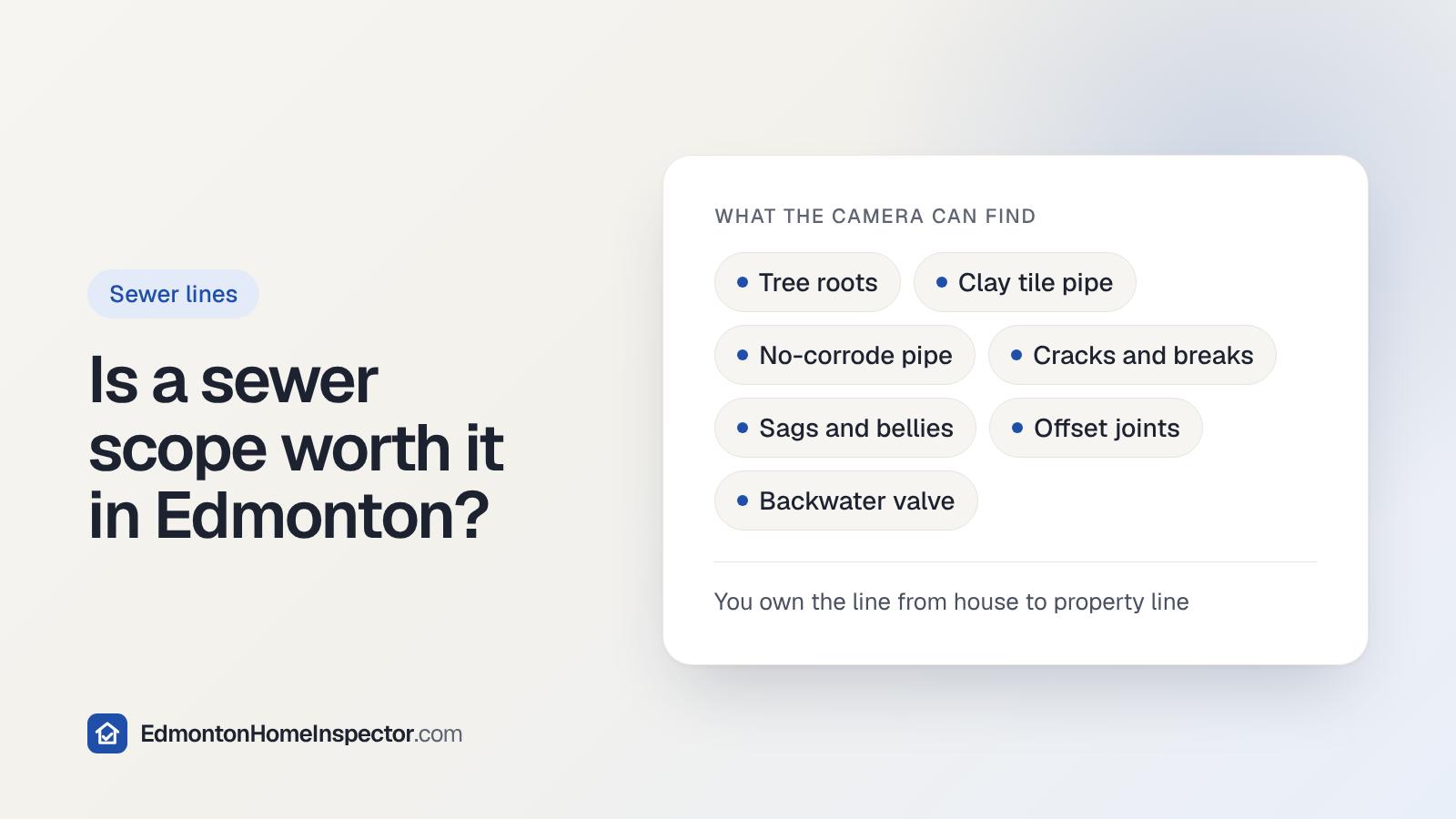
The video can show:
- Tree roots growing in through joints or cracks
- Breaks, cracks or collapsed sections
- Sags or "bellies" where the pipe has settled and water sits
- Offset joints where sections no longer line up
- Pipe material, such as clay tile, no-corrode, cast iron or plastic
- Buildup or blockages that slow drainage
You usually get the video or still images and a written summary. Ask for the recording itself so a plumber can look at it if you need a quote.
Is a sewer scope part of a standard home inspection?
No. A home inspection in Alberta is based primarily on a non-invasive look at the readily accessible parts of the home. The main sewer line is buried, so an inspector can only see the visible drain piping inside, how fixtures drain, and signs of past backups such as staining around a floor drain.
That is useful, but it cannot tell you what the pipe under the lawn looks like. If you want that, you need a camera. For the full scope of a standard inspection, read what a home inspection includes.
Who owns the sewer line in Edmonton?
It is split at the property line. EPCOR, which runs Edmonton’s drainage system, says the property owner is responsible for maintaining and repairing the sewer line on their property, including a backwater valve if there is one. EPCOR is responsible for the pipe from the property line to the sewer main in the street or alley.
For a buyer, that means the section from the house to the property line becomes your responsibility on possession day, including any roots, cracks or sags already in it. That is the section a sewer scope looks at.
Which Edmonton homes benefit most from a sewer scope?
Older homes, homes with big trees nearby, and homes with any history of slow drains or backups. EPCOR’s own guidance explains why.
- Clay tile pipe. EPCOR says clay pipe, commonly installed until the late 1980s, is easily penetrated and damaged by tree roots.
- No-corrode pipe. EPCOR notes this fibre pipe, also known as Orangeburg, was used in Edmonton homes from the 1940s through the 1960s, and that as it deteriorates, owners can see root intrusion and frequent backups.
- Mature trees. In established neighbourhoods, EPCOR lists poplar, willow, elm, ash and birch among trees often linked to root problems. It also notes roots keep growing in the pipe through winter.
- Cast iron. Common in older homes, cast iron drain pipe can corrode and scale inside over time. A camera shows its condition far better than the outside of the pipe does.
- A history of problems. Slow basement drains, gurgling, sewer smells or staining around the floor drain all point toward a closer look.
EPCOR’s page on common causes of sewer backups lists tree roots and aging pipes among the main culprits. A newer home with plastic pipe and no large trees nearby is generally lower risk, though not risk-free.
If you are looking at a home in a mature neighbourhood, our post on red flags in older Edmonton homes covers the other items worth checking.
What is a backwater valve, and does the house have one?
A backwater valve is a flap fitted on the main sewer line inside the house. EPCOR explains that it closes automatically when sewage tries to flow back from the city line, which protects the basement during heavy rain or a blockage in the main.
Whether a home has one often depends on its age. The City of Edmonton’s homeowner’s guide to lot grading and drainage says new homes have been required to have a backwater valve since 1988. Older homes may have had one added, or may not have one at all.
Points for buyers:
- Check that it exists and is accessible. The valve needs regular cleaning. EPCOR’s maintenance steps include removing the cover, checking for debris and making sure the gate moves freely.
- Look into the subsidy. EPCOR offers a backwater valve subsidy for eligible homes, including those built before 1989, with conditions such as installation by a professional plumber and a City permit. Funding is limited, so confirm current terms with EPCOR.
- Book a free flood check after you move in. EPCOR offers a flood prevention home inspection that looks at both inside and outside features in warmer months.
A sewer scope can confirm whether a backwater valve is on the main line and whether it looks clear, which is helpful when the seller is unsure.
When should I get a sewer scope during a purchase?
Inside your inspection condition, ideally on the same day or within a day or two of the home inspection. That leaves time to get a plumber’s opinion on anything the camera finds before your deadline.
- Write enough time into your condition. Tell your realtor you plan to scope the sewer so the deadline allows for it.
- Ask the seller about the line. Past backups, root cutting, replacement or a backwater valve installation should all have dates and invoices.
- Book a scope with a qualified sewer camera provider or plumber. Ask whether they include the video and a written summary.
- Get a plumber’s quote for any problem. Inspectors in Alberta cannot give repair cost estimates under the regulation, so pricing has to come from the trade that would do the work.
- Decide and negotiate. See how to negotiate repairs after an inspection and how inspection conditions work in Alberta.
So, is a sewer scope worth it?
For an older home, a home with large trees near the line, or any home with signs of drainage trouble, it is usually worth considering, because the private section is yours to repair once you take possession. For a newer home with plastic pipe and no history of problems, it is more of a judgement call.
Either way, pair it with a thorough pre-purchase inspection so you know the condition of the rest of the plumbing too.
Sources
- Sewer lines, EPCOR
- Tree roots in sewer lines, EPCOR
- No-corrode pipe, EPCOR
- Common causes of sewer backups in Edmonton, EPCOR
- Backwater valve, EPCOR
- Backwater valve subsidy, EPCOR
- Flood prevention home inspection, EPCOR
- The homeowner’s guide to lot grading and drainage, City of Edmonton
- Home Inspection Business Regulation (Alta Reg 75/2011), Alberta King's Printer
Founder
Banish is the founder of EdmontonHomeInspector.com, a home inspection business starting up in the Edmonton area. These guides explain Alberta's rules and common house issues in plain language, and every fact links to its official source at the end of the post. Licence numbers will be listed here once issued.
Last reviewed